Maple syrup is strongly associated with pancakes and waffles, but treating it only as a breakfast topping misses much of its culinary potential. It can also be used in porridge and yoghurt, baking, desserts, dressings, pan sauces, vegetable glazes, savoury dishes and drinks. [3][4]
The useful way to think about maple syrup in the kitchen is not as a universal replacement for another sweetener. It is an ingredient with its own sweetness, liquid content and flavour. That means the best results come from deciding what role you want maple to play in the dish - a light accent, a clear maple note, sweetness in a dressing, or a stronger flavour that can remain noticeable alongside roasting, spices or savoury ingredients.
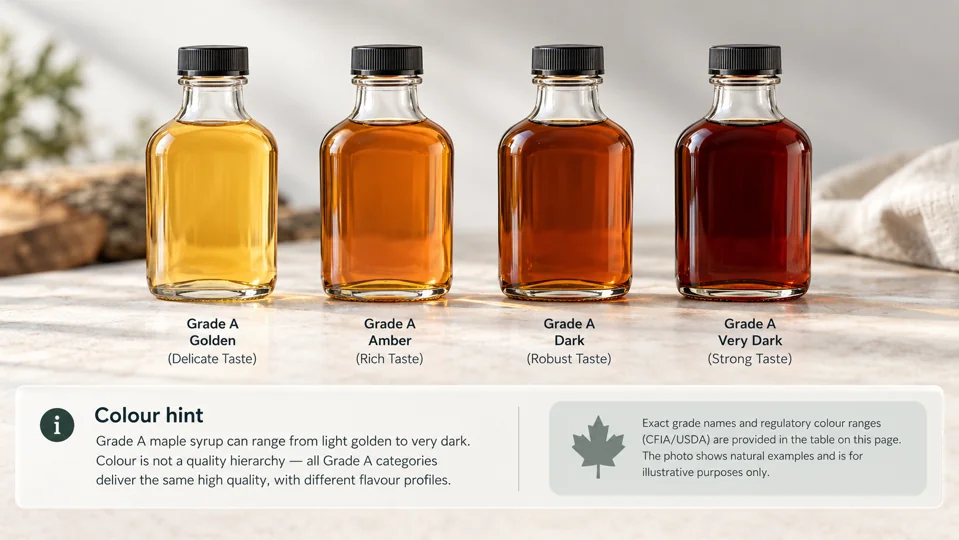
The official maple syrup colour classes can help describe flavour intensity. In both the Canadian and U.S. systems, Grade A includes Golden with a Delicate taste, Amber with a Rich taste, Dark with a Robust taste and Very Dark with a Strong taste. [1][2] Those names are useful sensory signposts. They are not official instructions telling you which syrup must be used for which dish.
Start with flavour intensity, not a quality ranking
One of the simplest ways to cook more confidently with maple syrup is to stop treating light and dark syrup as a ladder from “best” to “worst”. Dark and Very Dark can be fully Grade A. Their official descriptors indicate a stronger maple character, not an inferior product. [1][2]
For cooking, that gives you a practical choice. If you want the maple note to sit quietly in the background, a syrup described as Delicate or Rich may be a natural place to begin. If you want a more assertive maple flavour to remain noticeable in a glaze, sauce or strongly flavoured dish, Robust or Strong may be worth trying. That is an editorial pairing principle, not part of the grading regulations.
There is no rule saying Golden belongs on pancakes while Dark belongs in the saucepan. Personal taste, the other ingredients and the role of sweetness in the dish matter more than a rigid chart.
Breakfast: the familiar starting point
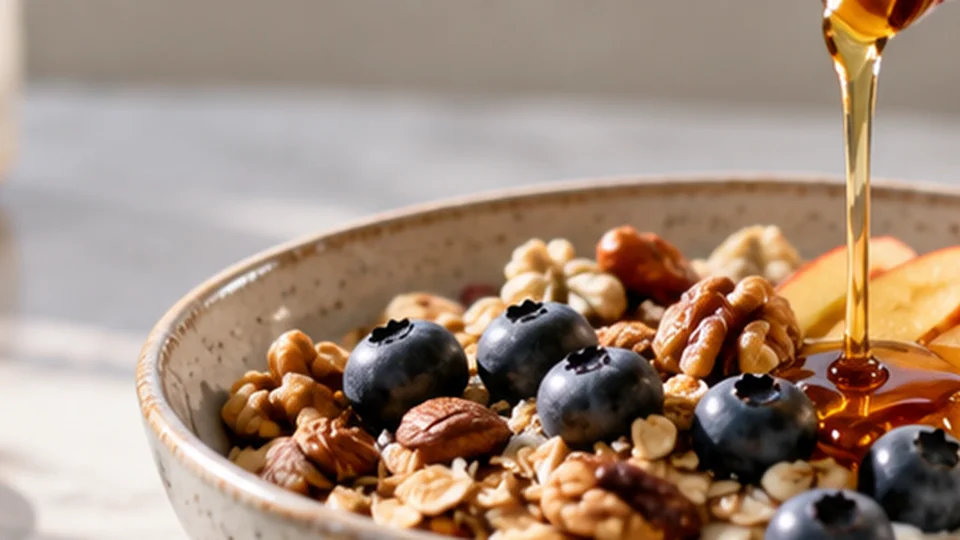
Pancakes and waffles remain the obvious use, and for good reason: the syrup is added at the table, so its flavour is easy to taste directly. Breakfast is also a useful setting for comparing grades because the food itself can be relatively neutral.
But the same basic idea extends beyond pancakes. Maple syrup can be stirred into porridge, used with yoghurt or added in small amounts where a recipe or serving would otherwise use another sweetener. [4] The key question is whether you want maple to dominate or simply add a recognisable background note.
This is also where the grade labels can become useful in a practical rather than hierarchical way. A Delicate or Rich profile may suit someone who wants a gentler maple presence; another person may prefer the stronger character of Robust or Strong. Neither preference is a quality judgement.
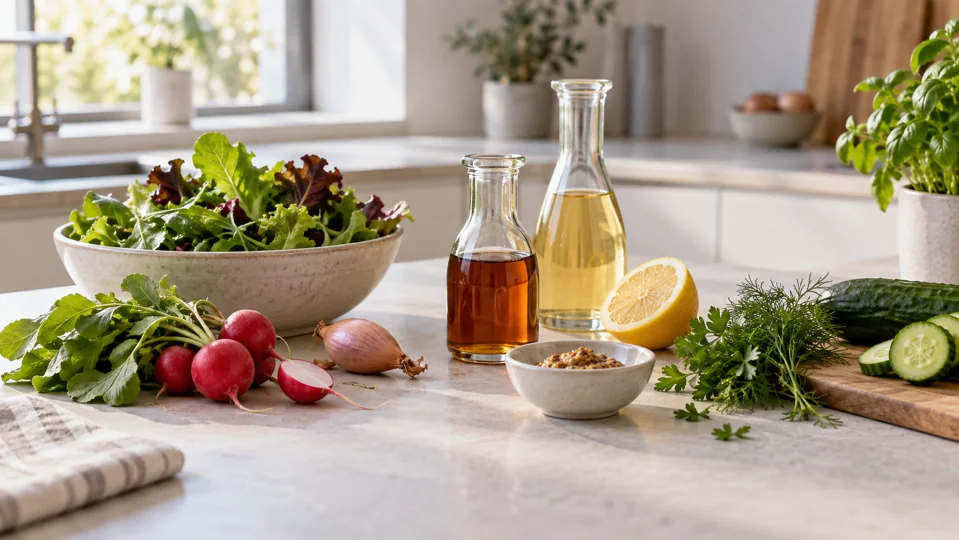
Dressings and vinaigrettes
Maple syrup can be used as the sweet component in a vinaigrette or other dressing. [4] For MapleSyrup.eu, this is an especially useful category because it shows that maple does not need to be confined to sweet dishes.
The right way to present this on the site is through tested recipes later, not through a supposedly universal ratio now. Acidity, oil, mustard, salt, herbs and the particular syrup all affect the final balance. A future recipe should therefore be developed and tested as a complete formula rather than derived from a generic “one spoon maple to one spoon vinegar” rule.
For the V1 guide, the important idea is simpler: maple can provide sweetness and flavour inside a savoury dressing, and the strength of the syrup can be chosen according to how noticeable you want the maple character to remain.
Roasted vegetables and glazes
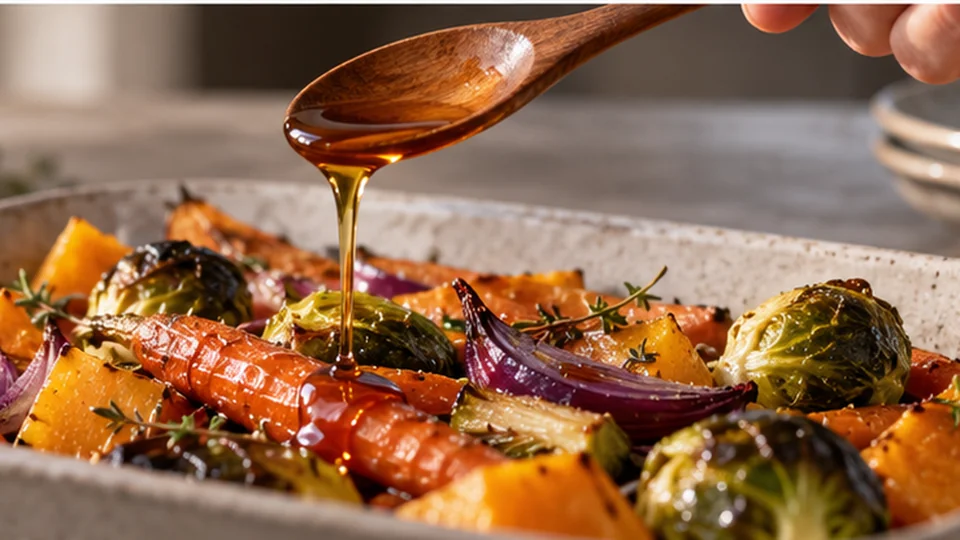
Roasted vegetables are one of the clearest ways to take maple beyond breakfast. The foundation research specifically identifies vegetables and glazes as useful culinary clusters for the site. [4]
A maple glaze can be thought of as a flavour layer rather than a reason to make the entire dish sweet. In future tested recipes, maple can be combined with savoury, acidic or aromatic ingredients and applied in a controlled way. The stronger official flavour descriptors of Dark/Robust and Very Dark/Strong make those grades interesting candidates when the syrup needs to remain recognisable against roasted flavours - but again, this is an editorial suggestion rather than a grading rule. [1][2]
For a European audience, root vegetables are a particularly natural editorial bridge. A “Maple Meets Europe” feature could develop contemporary maple glazes for carrots, parsnips, beetroot or other seasonal roots associated with northern and central European cooking. The site should call these contemporary maple adaptations, not traditional German, Austrian or Scandinavian dishes unless separate historical evidence exists.
Savoury cooking: fish, meat and pan sauces
The research framework also identifies fish, meat, glazes and pan sauces as useful directions for culinary content. [4] Their value for MapleSyrup.eu is not that they prove a particular tradition; it is that they demonstrate the range of roles a sweet ingredient can play in savoury cooking.
A small amount of maple can contribute sweetness to a sauce or glaze where the rest of the dish provides salt, acidity, spice or roasted flavour. A stronger maple grade may be easier to notice in a strongly flavoured preparation; a milder grade may be preferable if the aim is restraint. Those are starting points for testing, not universal rules.
The site should avoid recipes that rely on origin mythology - for example, implying that Canadian syrup is inherently better with one protein or Vermont syrup with another. The current evidence supports differences in grade and flavour descriptors, not a national culinary hierarchy.
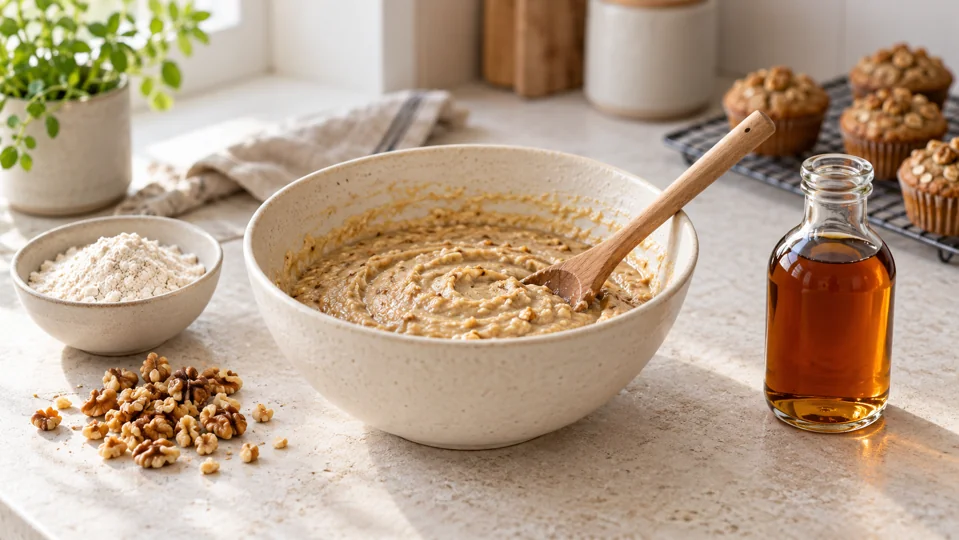
Baking and desserts: do not assume a 1:1 substitution
Baking is one area where a little caution matters. Maple syrup is a liquid sweetener, while granulated sugar is dry. Replacing one with the other can therefore change more than sweetness: it can alter the liquid balance and affect how a tested recipe behaves. The foundation research explicitly recommends recipe-specific kitchen testing by weight and rejects a blanket 1:1 substitution rule. [4]
That means MapleSyrup.eu should not publish a universal conversion such as “replace every 100 g of sugar with X ml of maple syrup”. A reliable baking article should test the particular cake, biscuit, pastry or dessert and document the actual formulation used.
For the V1 cooking page, the useful message is that maple can be used in baking and desserts, but substitution is a recipe-development question. If a reader is following an established recipe, using a version written and tested for maple syrup is more dependable than applying a generic conversion table.
The same principle applies to grade choice. A Delicate syrup may be intentionally subtle in a dessert; a Robust or Strong syrup may be chosen when the maple flavour itself is part of the point. Those choices should be described as flavour decisions, not as quality levels.
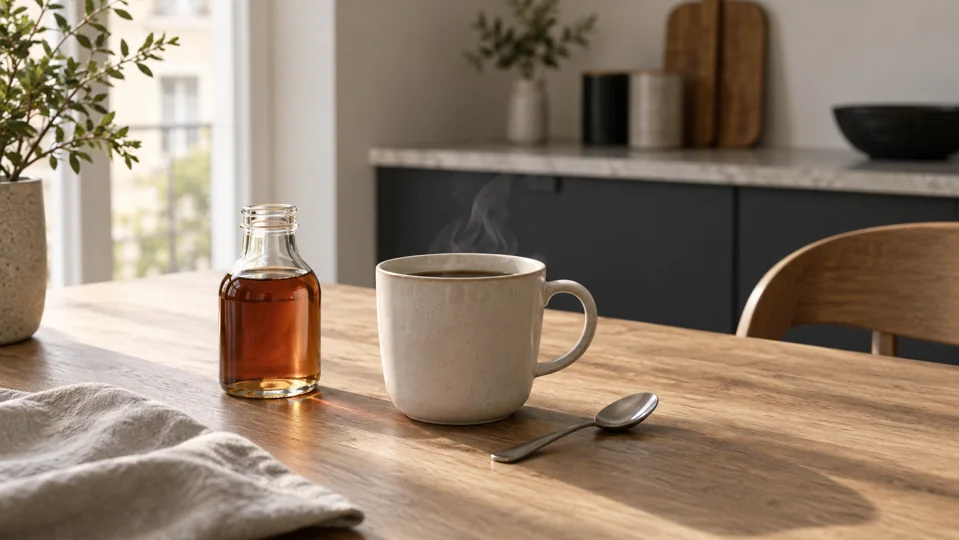
Coffee, non-alcoholic drinks and cocktails
Drinks provide another simple way to use maple in small quantities. The foundation framework includes coffee, non-alcoholic drinks and cocktails where appropriate. [4]
For the site, the strongest approach is again to treat these as flavour applications rather than health claims. Maple syrup can sweeten a drink and contribute maple character, but that does not turn the drink into a healthier option. Nutrition questions belong on the dedicated Nutrition & Health page.
Future drink recipes should be tested with exact quantities. For V1, there is no need to invent a universal coffee, cocktail or mocktail ratio.
Maple Meets Europe: contemporary ideas, not invented traditions
European relevance is one of MapleSyrup.eu's central editorial goals. The safest and most interesting way to build that relevance is through contemporary applications inspired by European culinary techniques rather than by pretending maple syrup has always been a traditional ingredient across Europe. [4]
The foundation research proposes a useful development list:
- a French-style vinaigrette using maple as the sweet component;
- German or Austrian-inspired roasted root vegetables with a maple glaze;
- Nordic-style porridge or roasted vegetables with maple as a modern addition;
- British-inspired breakfast and baking applications;
- Belgian waffles and Dutch pancakes as familiar formats in which maple can be explored;
- Italian agrodolce-style sauces in which maple is tested as one possible sweet element. [4]
These are editorial development ideas. They are not evidence that maple syrup is historically traditional in those cuisines. When a future recipe is published, the wording should make that distinction explicit.
That approach gives MapleSyrup.eu room to become creative without sacrificing the evidence standard used elsewhere on the site.
A simple way to choose a maple syrup for cooking
If you already have a bottle, start with the information on it rather than searching for a mythical “cooking grade”.
1. Check the colour/flavour class. Golden/Delicate, Amber/Rich, Dark/Robust and Very Dark/Strong describe increasing maple flavour intensity in the current Canadian and U.S. Grade A systems. [1][2]
2. Decide how visible you want maple to be. A subtle breakfast topping and a strongly flavoured glaze may call for different intensities. This is personal and recipe-specific.
3. Treat the grade as a guide, not a command. Dark is not automatically better for cooking, and Golden is not automatically better at the table.
4. For baking, use a tested maple-specific recipe. Do not assume a universal sugar-to-maple conversion.
5. When exploring European dishes, call the result what it is. A modern adaptation can be interesting without being presented as an old tradition.
The bigger idea
Maple syrup becomes more useful in the kitchen when it is treated as an ingredient rather than a symbol. Its official flavour descriptors give cooks a practical vocabulary for intensity, while the rest is a matter of recipe design and taste.
That leaves plenty of room for experimentation: breakfast, dressings, roasted vegetables, glazes, savoury sauces, baking, desserts and drinks can all become part of the MapleSyrup.eu culinary section. [3][4] What the site should not do is turn those possibilities into false rules, invented traditions or untested substitution formulas.
The next stage of the culinary project should therefore be recipe development, not more general research: select a small number of useful European-facing recipes, test them by weight, document the exact grade used, and publish the results as contemporary MapleSyrup.eu recipes rather than historical claims.
Sources & reading notes
Numbered references belong to this article. Dates, definitions and limitations matter.
- Canadian Food Inspection Agency
Canadian Grade Compendium: Volume 7 - Maple Syrup ↗Current checked 10 Sep 2026 · Grade names and colour classes.
- USDA Agricultural Marketing Service
United States Standards for Grades of Maple Syrup ↗Current standard used in dossier · US Grade A colour and flavour classes.
- Saraiva A. et al.
Maple Syrup: Chemical Analysis and Nutritional Profile, Health Impacts, Safety and Quality Control, and Food Industry Applications ↗· Composition context; phenolics and other minor compounds; evidence-level framing.
- MapleSyrup.eu project
V1 Content Packages CP01-CP1110 Sep 2026 · Evidence ledgers, source registers, publication controls and QA implementation. Internal editorial synthesis; the underlying dossier is not publicly hosted.
Download the complete source register (CSV) ↓ · Our methodology