Maple syrup is a concentrated maple product made from maple sap. That sounds simple, but supermarket shelves and online shops can make the category surprisingly confusing: genuine maple syrup may sit beside table syrups, pancake syrups and maple-flavoured products that use different ingredients and are not the same food.
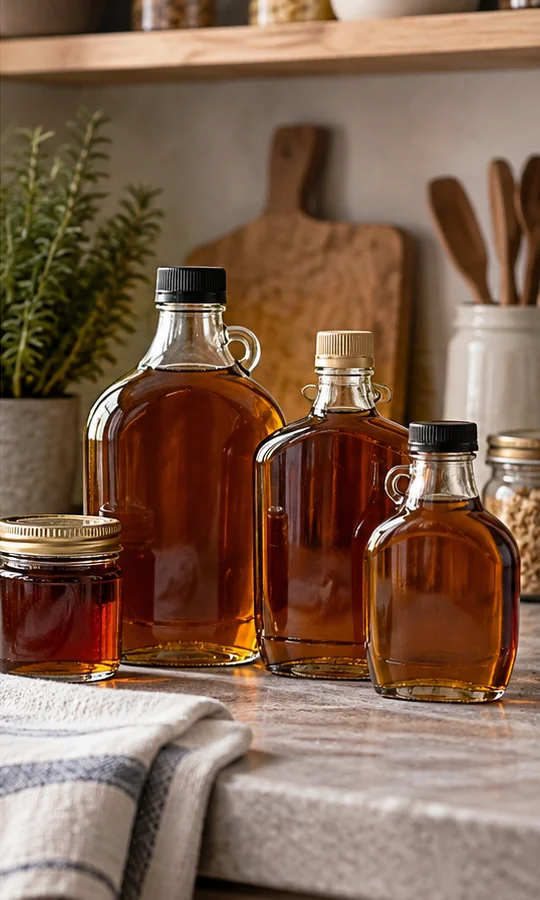
For European consumers, the safest starting point is not the shape of the bottle, a maple-leaf image or a Canadian-looking design. It is the product identity and the information on the label.
Canadian food standards provide a particularly clear technical reference. They define maple syrup as syrup obtained exclusively by concentrating maple sap, or by diluting or dissolving a maple product in potable water. That is a Canadian legal definition rather than an EU-wide one, but it captures the core distinction that matters for this guide: genuine maple syrup is a maple product, not simply a generic breakfast syrup with maple flavour. [1][2]
Maple sap and maple syrup are not the same thing
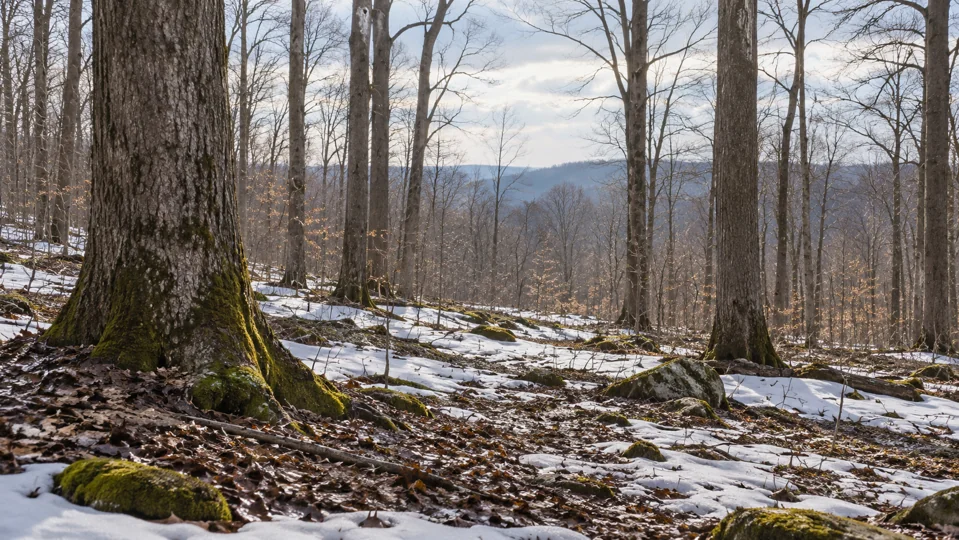
Maple sap is the liquid collected from maple trees during the sugaring season. Maple syrup is what results after water is removed and the sap is concentrated to the required syrup consistency.
That means syrup is not bottled tree sap. Production can involve tapping, collection, tubing or buckets, reverse osmosis in some modern operations, evaporation, finishing, filtration and grading. The dedicated How Maple Syrup Is Made guide explains that process in detail.
This distinction is useful because another product term - maple water - can refer to a beverage based on maple sap rather than concentrated syrup. MapleSyrup.eu will treat maple water as a separate product category; V1 does not use an unsourced universal legal definition for it.
What does “pure maple syrup” mean?
In ordinary consumer language, “pure maple syrup” is most useful as a way of distinguishing genuine maple syrup from blended or maple-flavoured table syrups. It should not be read as a nutrition claim, a special health grade or proof that one country makes a superior product.
Canadian labelling guidance treats maple syrup packaged and sold as such as a single-ingredient food. If an ingredient list is voluntarily shown on a Canadian package, the example is simply “Ingredients: Maple syrup”. [3]
For a European website, however, there is an important legal boundary. The foundation research did not establish a maple-specific EU statutory definition that gives the English marketing word “pure” one universal meaning across every context. MapleSyrup.eu should therefore use “pure” descriptively and encourage readers to check the actual product name and ingredients rather than turning the word itself into a legal guarantee.
Maple syrup vs pancake syrup or table syrup
The words on the front of a bottle can hide a major product difference. A table or pancake syrup may be formulated from other sugars, water, flavourings and additional ingredients. Some products may include a percentage of genuine maple syrup; others may use maple flavour without maple syrup.
Canadian regulatory guidance illustrates the distinction clearly. A product that does not meet the Canadian standard of identity for maple syrup cannot use the common name “maple syrup”. CFIA gives examples such as “table syrup with x% maple syrup” for a blend, while a syrup made from sugar, water and maple flavouring without maple syrup could be called “table syrup” or “gourmet syrup”. [3]
Those examples are Canadian rules, not a universal dictionary for every European product label. The broader consumer lesson is portable: maple syrup, maple-flavoured syrup and generic table/pancake syrup should not be assumed to be the same product.
How to tell whether a bottle is genuine maple syrup
A quick label check is more reliable than packaging imagery.
Look first at the product name. Then check the ingredients or other mandatory food information available for that product. If a syrup is a multi-ingredient product containing glucose syrup, sugar syrup, flavourings or other ingredients, it is not the same thing as a single-ingredient bottle of maple syrup.
Next, check the declared origin and, where relevant, the grade and colour class. Origin tells you where the syrup comes from; grade helps describe regulated quality characteristics in systems such as Canada and the United States. Neither should be confused with the basic question of whether the product itself is maple syrup.
The full Maple Syrup Buying Guide will bring these checks together for European shoppers.
Does maple syrup have to come from Canada?
No. Canada is the much larger producer and dominates recorded European maple-product supply, but genuine maple syrup is also produced in the United States, especially in Vermont and other northern states.
Canadian origin is therefore an important and common origin, not part of the definition of maple syrup itself. A genuine Vermont maple syrup does not become less genuine because it was made in the United States, just as a Canadian label does not by itself prove superior quality.
For the production data and a fair comparison of the two countries, see Maple Syrup in Canada, U.S. Maple Syrup and Canada vs U.S. Maple Syrup.
What are maple sugar, maple butter and maple taffy?
Maple syrup is part of a broader family of maple products. Canadian regulatory guidance lists maple sugar, soft maple sugar, maple butter and maple taffy as examples of maple products other than maple syrup. [3]
The Canadian standard also specifies that maple sugar must not contain more than 10% moisture. [1] That technical rule belongs to Canadian food standards, but it is useful evidence that maple sugar is treated as a distinct maple product rather than simply another name for syrup.
For V1, MapleSyrup.eu keeps these products as short signposts rather than pretending that one brief definition captures every regional recipe or legal formulation. Detailed cultural and production treatment can follow later where the evidence is equally strong.
Is Grade A the same thing as pure maple syrup?
No. Product identity and grade answer different questions.
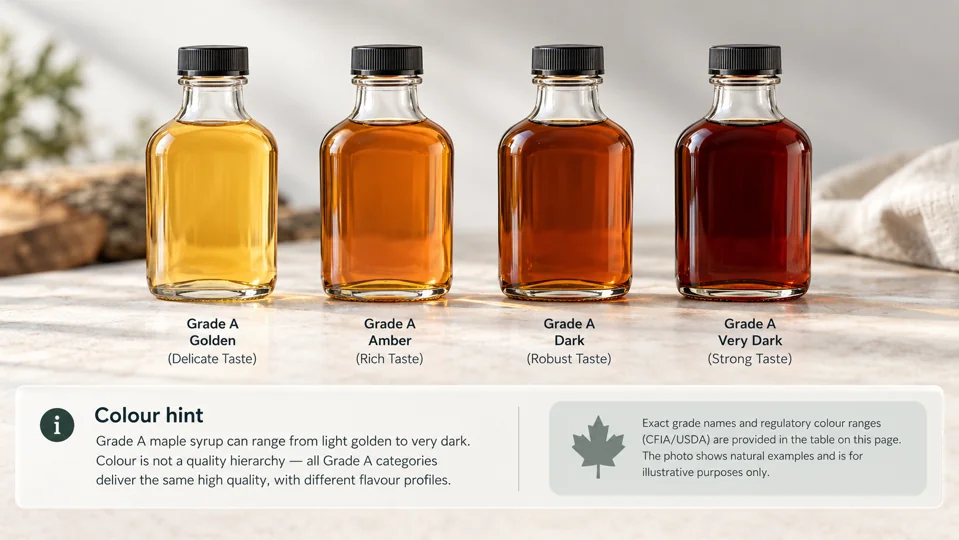
“Maple syrup” describes the food. A grade such as Canada Grade A or U.S. Grade A describes whether syrup meets a defined grading standard and, in the modern systems, places Grade A syrup into colour/taste classes such as Golden, Amber, Dark and Very Dark. [4][5]
That is why “Grade A” should not be translated into “more pure”. A darker Grade A syrup can still be fully Grade A, and a national grade does not turn maple syrup into a different food category. See Maple Syrup Grades, Colour & Taste for the full explanation.
Is maple syrup just sugar?
Maple syrup is a sugar-rich sweetener, but “just sugar” can mean two different things and should be handled carefully.
As a food category, genuine maple syrup is not the same product as granulated table sugar or a generic sugar syrup: it is produced from maple sap and has its own compositional and grading standards. Nutritionally, however, it remains a caloric sweetener whose dominant carbohydrate content is sugar. The presence of smaller amounts of minerals or other compounds should not be turned into a “superfood” claim.
The dedicated Maple Syrup Nutrition & Health page separates basic composition from the much weaker evidence for broad health benefits.
A simple way to think about the category
For everyday shopping, the category can be reduced to three questions:
1. Is the product actually maple syrup? Check the product identity and ingredients rather than relying on imagery.
2. Where was it produced? Canada is the largest producer, but the United States also has a substantial maple industry.
3. What grade or flavour profile do you want? Where a Canadian or U.S. Grade A system is used, Golden, Amber, Dark and Very Dark describe different colour/taste ranges rather than a best-to-worst ranking.
Those three questions separate product identity, origin and grade - three ideas that are often blurred together on maple-syrup packaging and in online explanations.
The evidence-based takeaway
Maple syrup is a concentrated maple product made from maple sap. It is not a generic name for every sweet breakfast syrup, and a maple-themed bottle does not tell you what is inside.
For European consumers, the most reliable approach is straightforward: identify the product, read the label, separate genuine maple syrup from flavoured or blended syrups, treat origin as origin rather than a quality verdict, and use grade/colour information to choose the style of syrup you want.
MapleSyrup.eu will use those distinctions consistently across the rest of the site.
Sources & reading notes
Numbered references belong to this article. Dates, definitions and limitations matter.
- Canadian Food Inspection Agency
Canadian Standards of Identity: Volume 6 - Maple Products ↗Current document; modified 28 Apr 2021 · Direct standard of identity for maple syrup and maple sugar.
- Government of Canada / Justice Laws
Safe Food for Canadians Regulations ↗Current through 2026 source check · Regulatory framework and maple-product definition.
- Canadian Food Inspection Agency
Labelling requirements for maple products ↗Current checked 10 Sep 2026 · Grading/labelling framework; future Buying Guide.
- Canadian Food Inspection Agency
Canadian Grade Compendium: Volume 7 - Maple Syrup ↗Current checked 10 Sep 2026 · Grade names and colour classes.
- USDA Agricultural Marketing Service
United States Standards for Grades of Maple Syrup ↗Current standard used in dossier · US Grade A colour and flavour classes.
Download the complete source register (CSV) ↓ · Our methodology